
Moving abroad with kids usually starts with careful planning.
Planning Visas.
Researching Housing and Schools.
Calculating budgets.

Ready for a stress-free Relocation?
Families typically approach these decisions thoughtfully and thoroughly.
I remember ticking off boxes and feeling oddly proud of how organised we were — visas submitted, housing sorted, school applications sent. On paper, everything looked right.
And yet, once they arrive, many are surprised by how unsettled things feel.
Not because they missed something obvious and definitely not because they weren’t prepared enough.
The most challenging parts of relocating with children aren’t logistical.
They’re human.
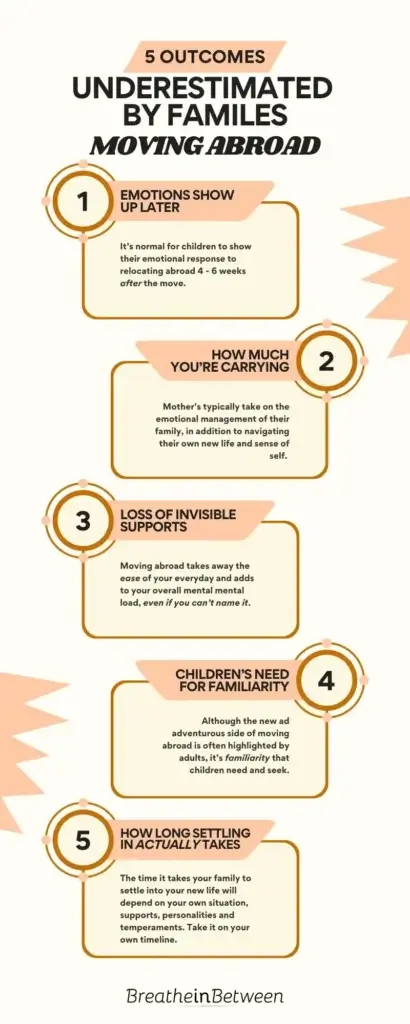
The gap no one warns you about when moving abroad with kids
I’ve noticed a pattern, from both my own experience and in the families I speak with. As a relocation coach and a mother who’s lived this transition, I see the same rhythm again and again.
The move itself often goes well enough.
Bureaucracy gets done, somehow.
Accommodation is always found and the family moves in with no issues.
Slowly, the children begin school and Kindergarten, just like at home.
Except, it’s not just like at home. After the first 4 – 6 weeks, something seems to shift.
Children who seemed “fine” begin to struggle.
Parents feel more tired, more reactive and sometimes even less sure of themselves, wondering if they’ve made a mistake by moving their family abroad.
Suddenly, small daily tasks and challenges feel heavy, difficult and exhausting.
This is the part many families underestimate. Not because they’re naïve, but because it’s rarely talked about honestly.
The emotional impact of relocating a family overseas.
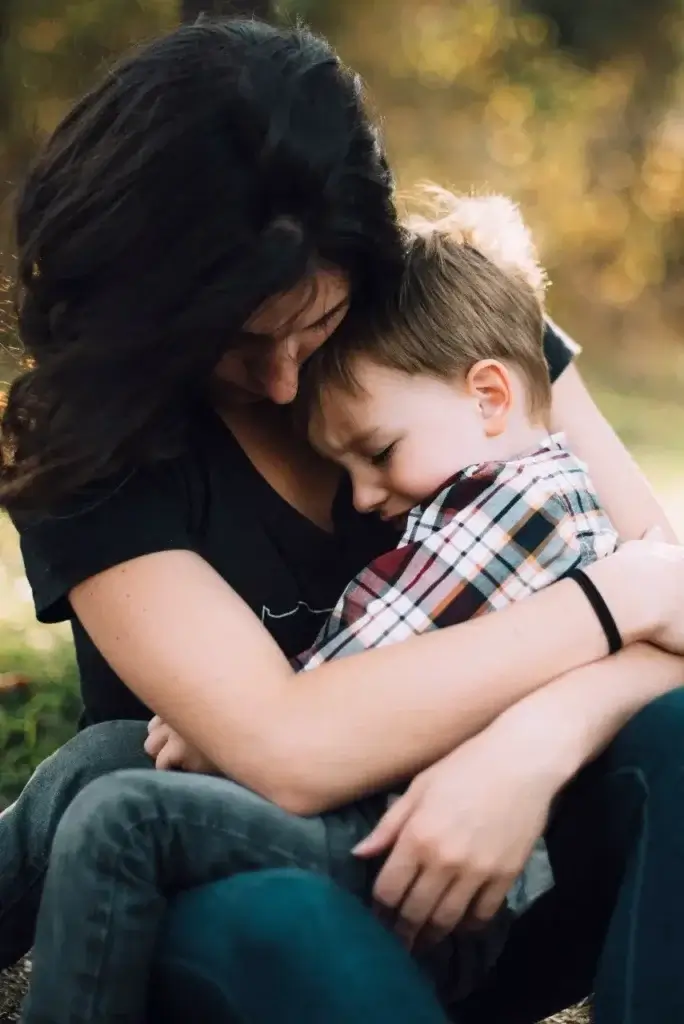
1. Why the emotional impact of moving overseas with children shows up later
One of the biggest surprises for parents is timing.
Children don’t always react immediately to an international move. There’s too much excitement.
Many children hold it together through the practical chaos of packing, travelling and arrival. It’s often only once life begins to settle into a familiar routine that emotions surface.
This delayed response is completely normal.
For children, emotional processing often happens when they finally feel safe enough to let it out. What can look like “regression,” defiance, or moodiness is often their nervous system catching up.
Often, this is also the moment parents start to finally slow down and realise how much they’ve been holding together.
In addition, many younger children simply can’t comprehend what it means to move abroad until the familiar routine settles in and they’re not in their usual location.
For parents, this can feel confusing and worrying:
“They were coping so well — what happened?”
Nothing went wrong. Your children are simply responding to the changes they’re experiencing.

2. Mothers underestimate how much they’re carrying
Another common underestimation is the weight mothers hold during relocation.
Even in families with strong partnerships, mothers are often:
- tracking children’s emotional states
- managing routines
- interpreting new systems
- holding the family’s sense of safety
All while navigating their own loss of familiarity and identity.
Many capable, organised women are surprised by how unsteady they feel abroad. Tasks that once felt easy require more energy. Confidence feels conditional. Decision fatigue sets in quickly.
It can be as small as standing in a supermarket aisle, staring at unfamiliar products, suddenly feeling close to tears.
You’re not failing.
Maintaining an elevated level of responsibility through a long-term transition is hard.
Understanding this can be deeply relieving.
3. The loss of invisible supports
When families move abroad, they don’t just leave people and places.
They lose an ease to their life.
The ease of knowing how things work. The ease of knowing which forms matter. Which doctor to call. How long things usually take.
Suddenly, everyday tasks require attention and interpretation. Over time, this constant vigilance takes a toll.
This is why many parents feel exhausted even when “nothing is technically wrong.” The mental load has changed.
4. Children need familiarity more than excitement
It’s tempting to focus on the positives of an international move: new adventures, the opportunities to learn and of course, the growth of each personality.
And those things do matter.
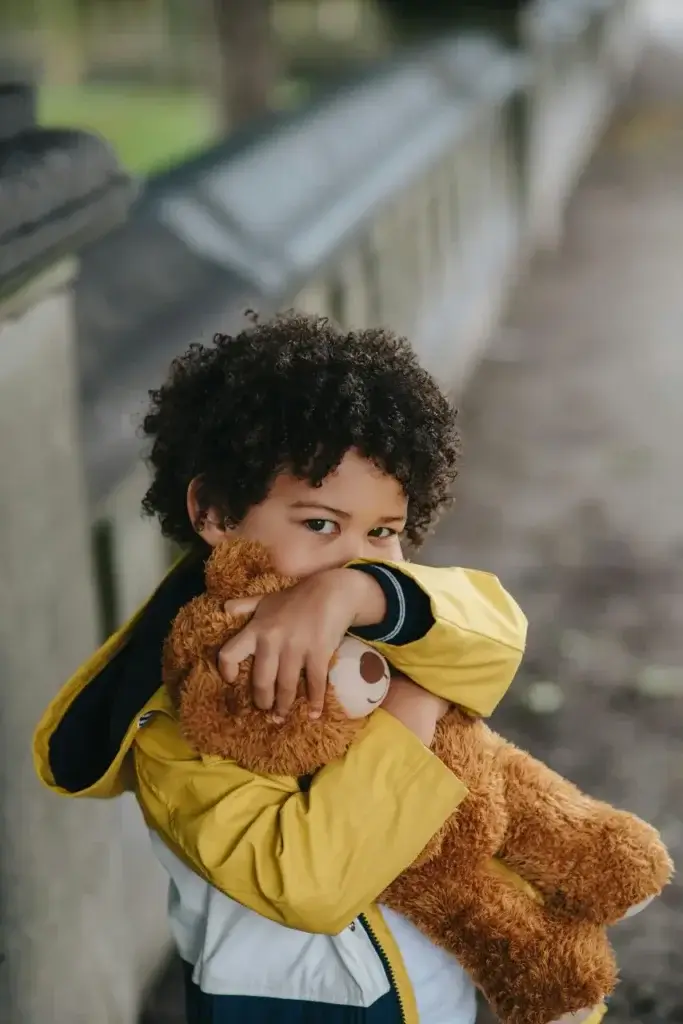
But in the early stages of this transition, children actually need familiarity.
Our kids crave familiar objects, routines and ways of being soothed and loved.
When these are taken away through the impacts of international relocation, children may cling, withdraw, or push back. These behaviours are often misread as resistance or ingratitude, when they’re actually your child’s way of seeking reassurance. From you.
Anchors matter more than novelty at first.
5. Why settling after an international move with kids takes longer than expected
There’s a quiet pressure around relocation timelines.
“We should be settled by now.”
“Other families seem fine.”
“Why does this still feel hard?”
The truth is that, like most transitions in life, adjustment is rarely linear. There are periods of calm, followed by unexpected dips. Progress often happens in small, uneven steps.
These family relocation challenges are common. Even in well-planned international moves with kids.
Avoid comparing your family’s timeline to someone else’s and take each day as it comes.
You’re not behind.
Your family’s transition is theirs alone.
What helps families navigate this more steadily
There’s a few things that I’ve noticed that consistently help families through these life-changing transitions. None of these require you to do more. They’re about doing less but with more intentionality.
- Naming what’s normal.
- Reducing pressure to “make it work” quickly. Instead, relax into the change.
- Prioritising emotional safety alongside logistics.
- Creating small, predictable anchors.
- Supporting your children’s nervous systems to stay calm. Avoid focusing only onbehaviour.
Each of these points brings a gentler approach to supporting your children.
Often, during these transitions, all our children need is us. Don’t forget to be patient with yourself, too.
You don’t have to figure this out alone
An international move with kids reshapes daily life in ways most families don’t anticipate, even when the move was wanted and perfectly planned.
If you’re preparing for an international move, or already navigating life abroad, my Expat Starter Kit is designed to support the early months of transition with practical tools and grounded guidance.
Download the Expat Starter Kit here ⬇️
You’re doing something brave for your family.
Take it one step at a time.